
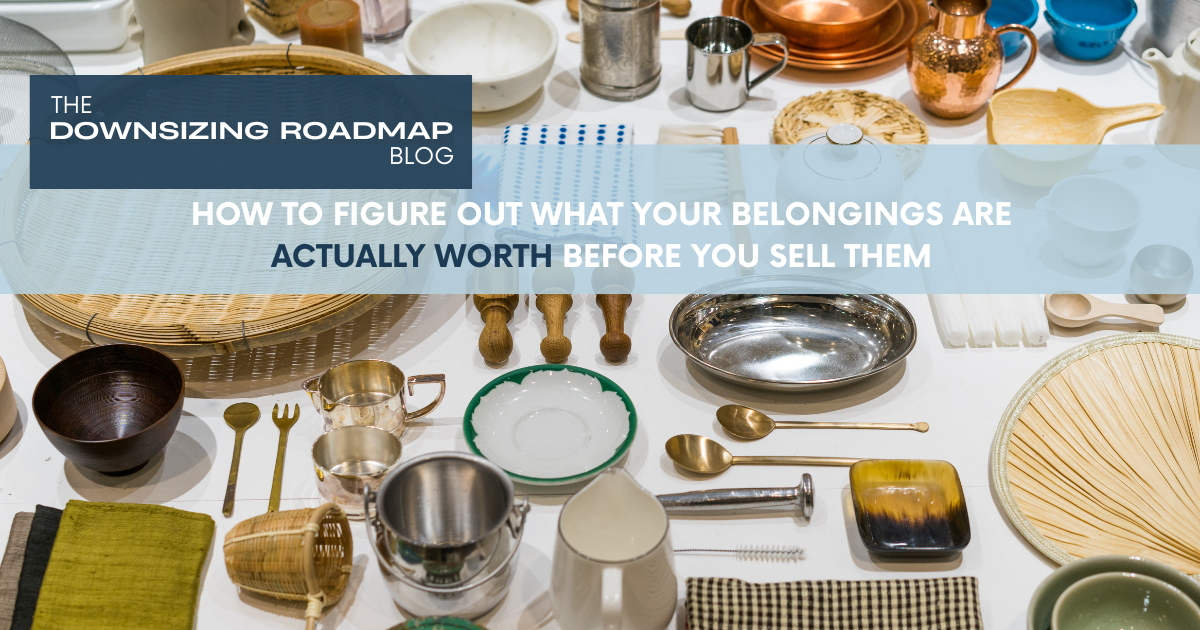
We hear this question from clients constantly: what are my belongings worth now that it is time to sell? The answer almost always surprises people. What you paid for something has almost nothing to do with what someone will pay for it today. That gap between sentimental value and resale value causes more frustration in the downsizing process than almost anything else. Understanding it early saves a lot of wasted time and disappointment.
We work with clients who are getting ready to move, right-size, or clear out a lifetime of belongings. What we tell them consistently is this: current resale value depends on what the market is paying right now. Original cost does not factor in. What a relative paid for it does not factor in. What an appraiser said fifteen years ago does not factor in either.
Why Does What You Paid for Something Not Matter Anymore?
Original purchase price is not a reliable guide to current resale value. Markets shift, trends change, and buyer demand moves in unpredictable directions. Furniture that felt high-end in 1995 may have very little demand today. Tastes and styles have moved on, and the market reflects that. Electronics depreciate quickly regardless of original cost. Most have almost no resale value within a few years of purchase.
Collectibles follow a similar pattern. Many categories that held value for decades have softened considerably. Fine china, crystal, silverware, and certain antiques are all examples. The buyers who collected those things are aging. Younger buyers are generally not stepping in at the same price points. That does not mean those items have no value. Current data matters more than assumptions when you are deciding what to do with them.
How Do You Research What Your Belongings Are Actually Worth Today?
The most reliable place to start is completed sales, not asking prices. Anyone can list something at any price. What matters is what buyers actually paid. On eBay, you can filter results to show sold listings. Doing that gives you a realistic picture of what the market is currently bearing for a specific item. Facebook Marketplace and Craigslist reflect local demand and local pricing. Shipping costs affect what online buyers will pay for heavier pieces, so local data matters.
For furniture, decor, and everyday household items, check your local Facebook Marketplace. Look at what comparable pieces have actually sold for recently. Etsy is useful for vintage items with collector appeal. When it comes to jewelry, silver, and gold, current spot prices are publicly available online. Those give you a reasonable baseline before you talk to anyone.
We also tell clients to check local consignment shops and resale stores. Their pricing reflects what real buyers in your area are willing to spend. A shop selling a dresser similar to yours for $85 gives you a grounded and honest number to work from.
Which Belongings Are Actually Worth Getting Professionally Appraised?
Not everything warrants the time and cost of a professional appraisal. This is where people sometimes spend money they do not need to spend. Generally speaking, a formal appraisal makes sense for fine jewelry and signed artwork. Authenticated antiques, coins, stamps, rare books, and items with provenance documentation also fall into that category. When you have reason to believe something carries significant value, a specialist appraiser can give you a defensible number.
For most household items, your own research using sold listings will be reliable enough. This includes furniture, electronics, appliances, and everyday decor. An estate sale company can also walk through a home and give you a general sense of value. They often do this at no charge upfront because they work on commission.
One thing we tell clients regularly is worth understanding before you start. An appraisal tells you what something is worth for insurance or estate purposes. That number can differ from what the item will actually sell for today. Those are two different figures, and knowing the difference matters when you are making real decisions.
What Categories of Belongings Often Surprise People in Either Direction?
Some belongings hold value or appreciate in ways people do not expect. Mid-century modern furniture is one example. Certain vintage cast iron cookware, vintage cameras, and retro appliances in working condition are others. Vinyl records with collector demand can also bring meaningful money. Handmade quilts and original artwork by regional artists have active buyer communities. Quality vintage clothing does as well, when you know where to look.
On the other side, many belongings that feel valuable often disappoint in the resale market. China sets, crystal, and most formal silver tend to sell for far less than expected. Upright pianos and large entertainment centers are also difficult to move at meaningful prices. We are not saying those things have no worth. The demand is simply limited, and pricing them based on hope rather than current data usually leads to frustration and delay.
How Do You Make Decisions Without Letting Emotion Get in the Way?
This is genuinely one of the harder parts of downsizing, and we want to acknowledge that directly. When something belonged to a parent, it is natural to feel it should carry financial weight. If it represents a meaningful chapter of your life, that feeling is even stronger. Emotional value and market value are both real. They are also separate, and treating them as separate helps the process move forward.
What we suggest to clients is straightforward. Separate the decision about what to keep from the decision about what to sell. Once you decide to sell something, research what your belongings are worth at current prices. Set a realistic number and move forward from there. Attaching the asking price to what you originally paid will slow the process. Pricing based on emotional weight typically results in things sitting unsold far longer than necessary.
The goal is to make decisions based on what is actually true in today’s market. That kind of clarity is genuinely freeing. Once you have real numbers, you can build a real plan around them.
Frequently Asked Questions
Is it worth getting everything appraised before an estate sale?
In most cases, no. Professional appraisals are best reserved for jewelry, signed artwork, authenticated antiques, and items with documented provenance. For the majority of belongings, researching completed sales on eBay, Marketplace, and local consignment shops gives you a reliable enough picture without the added cost.
Why are our china and crystal not worth what we expected?
Demand for formal china, crystal, and silverware has dropped significantly over the past two decades. Younger buyers are not purchasing formal dining sets the way previous generations did. The collector market has softened across those categories. This reflects a broad shift in buying habits rather than anything specific to what you own.
Where is the best place to research what belongings are worth today?
For most items, we recommend starting with eBay sold listings. Those show what buyers actually paid rather than what sellers are asking. Facebook Marketplace and local Craigslist listings reflect regional demand and realistic pricing. For vintage or collectible items, Etsy sold listings are also worth checking.
Should we hire someone to value everything in the house?
If you are planning an estate sale, most estate sale companies will do a walkthrough at no upfront cost. They work on commission, so the initial assessment is generally free. This is a practical starting point for understanding what is worth selling and how to price it without paying separately for individual appraisals.
What if we think something is valuable but are not sure?
Start with your own research using sold listings. When that research suggests genuine value beyond everyday resale prices, a specialist appraiser for that category may be worth consulting. Going straight to an appraiser before doing basic research often means spending money you did not need to spend.
If you’re thinking about downsizing and want a clear place to start, you can begin with our Free Downsizing Guide: https://downsizingroadmap.com/guide/
If you prefer to learn by listening, you can explore The Downsizing Roadmap Podcast: https://downsizingroadmap.com/downsizing-roadmap-podcast/
We share ongoing insights on our Facebook page: https://www.facebook.com/downsizingroadmap/
You’re also welcome inside our private Facebook group, Downsizing & Decluttering Community | Simplify Your Next Chapter, where people ask questions and share experiences: https://www.facebook.com/groups/downsizingroadmapcommunity
And if you’re ready to talk through your situation, reach out here: https://downsizingroadmap.com/help/
Jodi Rosko and Heather Fisher and Downsizing Roadmap work with clients every day to help them move through downsizing with a clear plan, so progress can happen without creating more stress along the way.