
If you are wondering where to start downsizing, begin with one low-emotion room, such as a guest room, a hall closet, or a spare bathroom. That single choice removes the pressure of facing the whole house at once, and it gets you moving today. We work with clients on this exact question every week, and the answer almost always comes down to picking the easiest room first.
Why Does Knowing Where to Start Downsizing Feel So Hard?
Most people freeze before they ever fill a single box. They look around at decades of belongings, and the entire house starts to feel like one impossible task. We hear this from clients constantly, and the feeling is completely normal. The struggle is rarely about effort or willingness. Instead, the house simply feels too big to face in one sitting.
When everything seems equally urgent, nothing actually gets started. That mental gridlock keeps good people stuck for months, and sometimes for years. So the real issue is not whether you can downsize at all. The question is where to start downsizing in a way that feels manageable right now.
Where Should You Start Downsizing in Your Home?
Start with the room that carries the least emotional weight for you. For most clients, that means a guest room, a hall closet, a spare bathroom, or a laundry area. These spaces hold practical items rather than memories, so the decisions stay quick and clear. You build real confidence before you ever touch old photos or a parent’s keepsakes.
We tell clients to skip the garage, the attic, and the primary bedroom at the beginning. Those areas hold the heaviest mix of clutter and emotion, and they drain your energy fast. Beginning there is the single most common reason people give up early. A smaller, simpler room protects your momentum while you learn how you make decisions.
How Do You Keep Going After the First Room?
Momentum comes from finishing, not from trying to do everything in one push. Once you clear a single room completely, you have proof that the process works. That finished space becomes your reference point for every room that follows. Many clients tell us this first win is what finally made the whole project feel possible.
After that, choose your next room by ease rather than by urgency. You are building a habit here, so each room should feel a little more doable than the last. We often suggest a short break between rooms to reset your energy. Steady progress beats a frantic weekend almost every time.
What If You Get Stuck on Sentimental Items?
Set sentimental items aside in a clearly marked box and keep moving forward. You do not have to decide everything at once, and forcing those choices early tends to stall the entire effort. Clients regularly tell us that sentimental decisions get easier after a few rooms of practice. Your decision-making gets stronger with every item you sort.
When you finally return to those keepsakes, give yourself permission to keep what truly matters. Downsizing is not about emptying your life of meaning. Rather, it is about making room for the next chapter without dragging the weight of every object into it. We guide clients through this part gently, because it deserves care.
How Long Should Downsizing One Room Take?
Plan for a few focused sessions instead of one exhausting marathon. A spare room often takes two or three sessions of about ninety minutes each. Short, repeatable sessions protect your energy and keep the work from feeling endless. We see far better results from clients who pace themselves than from those who try to power through in a day.
If you still feel unsure where to start downsizing, our Free Downsizing Guide walks you through it room by room. Many clients also like to learn while they go about their day, so our Downsizing Roadmap Podcast covers these same questions in short, easy episodes. You can also follow along with us on our Facebook Group, where we share ongoing tips and answer real questions from people in the middle of this.
Frequently Asked Questions
Where should I start downsizing if I feel completely overwhelmed? Start with the smallest, least emotional room in your home, such as a linen closet or a spare bathroom. A quick, clear win in a low-stakes space lowers the pressure and shows you that the process actually works.
Should I start downsizing with the biggest mess first? No, and we usually steer clients away from that approach. The biggest mess often carries the most emotion, so starting there tends to drain your energy before you build any confidence.
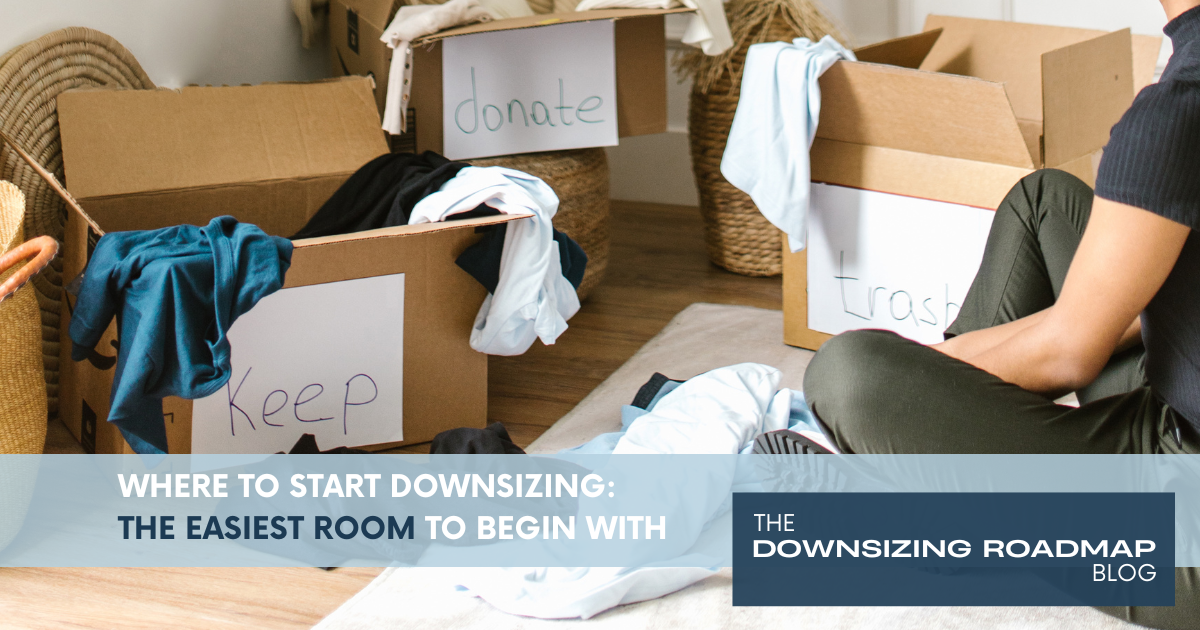
How do I downsize one room without making a bigger mess? Work in one defined zone at a time, and finish each zone before you open the next one. Keep three simple piles going, which are keep, donate, and toss, so items leave the room instead of shifting around it.
What should I do with items I cannot decide on? Place them in a marked “decide later” box and continue with the rest of the room. Most clients find that these choices get much easier once they have a few finished rooms behind them.
How often should I work on downsizing? Short, regular sessions work better than rare, long ones. Two or three sessions a week of around ninety minutes keeps you moving without burning out.
If you’re thinking about downsizing and want a clear place to start, you can begin with our Free Downsizing Guide: https://downsizingroadmap.com/guide/
If you prefer to learn by listening, you can explore The Downsizing Roadmap Podcast: https://downsizingroadmap.com/downsizing-roadmap-podcast/
You can follow along with us on our Facebook page, where we share our latest posts and updates: https://www.facebook.com/downsizingroadmap/
You’re also welcome inside our private Facebook group, Downsizing & Decluttering for You or Your Parents | Downsizing Roadmap, where people ask questions, share experiences, celebrate wins, and find motivation from others going through the same thing: https://www.facebook.com/groups/downsizingroadmapcommunity
And if you’re ready to talk through your situation, reach out here: https://downsizingroadmap.com/help/
Jodi Rosko and Heather Fisher and Downsizing Roadmap work with clients every day to help them move through downsizing with a clear plan, so progress can happen without creating more stress along the way.