
Downsizing costs are rarely measured in dollars alone. While many people focus on home prices, moving expenses, or storage fees, the real cost of downsizing often shows up in less visible ways—time, emotional energy, and the level of support you have along the way.
Understanding these hidden costs early can make the process calmer, more intentional, and far less overwhelming.
The Time Cost of Downsizing
One of the biggest surprises for downsizers is how long the process actually takes. Downsizing isn’t a single event—it’s a series of decisions layered over weeks, months, or even years.
Sorting, researching options, coordinating repairs, handling paperwork, and communicating with family all require time. Additionally, emotional decisions naturally take longer than logistical ones. Rushing this stage often leads to regret or burnout, which can slow everything down even more.
Starting early allows you to pace yourself, make thoughtful decisions, and avoid the pressure that comes when downsizing is forced by circumstances.
The Energy Cost Most People Don’t Expect
Downsizing costs emotional and mental energy long before boxes are packed. Each item represents a decision, a memory, or a question about the future. Over time, that constant decision-making can feel exhausting.
Physical energy also plays a role. Even light organizing can feel heavier than expected, especially when paired with life changes like retirement, health shifts, or grief. Because of this, many people feel drained—not because they’re doing too much at once, but because they’re carrying the emotional weight of every choice.
This is why breaking downsizing into smaller phases and honoring your limits matters more than speed.
The Support Factor: You Don’t Have to Do This Alone
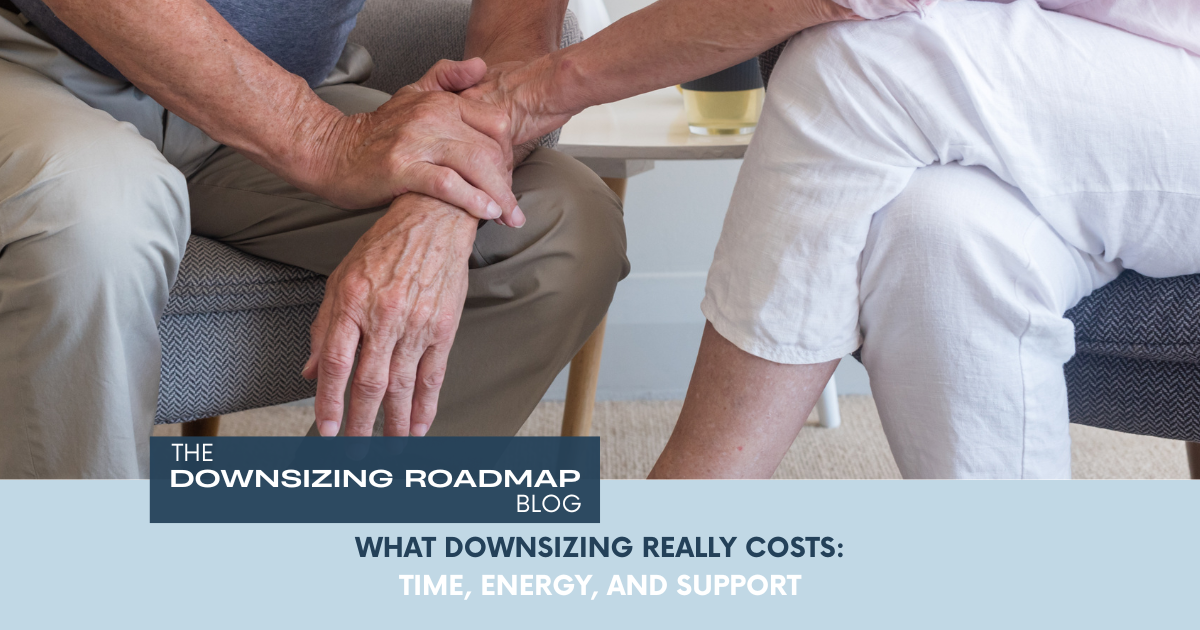
Another often-overlooked downsizing cost is support—or the lack of it. Downsizing is easier when you have trusted people to lean on, whether that’s family, professionals, or a community that understands the process.
Support provides clarity, accountability, and reassurance. It can also reduce conflict when multiple family members are involved. Without it, people often stall, second-guess themselves, or feel isolated in their decisions.
Downsizing was never meant to be a solo project.
Why Understanding Downsizing Costs Changes Everything
When you recognize that downsizing costs time, energy, and support—not just money—you can plan accordingly. Instead of asking, “How fast can I do this?” the better question becomes, “How can I do this well?”
Starting early creates options. It allows room for reflection, conversations, and adjustments along the way. Most importantly, it helps downsizing feel like a thoughtful transition instead of a stressful reaction.
You Don’t Have to Downsize All at Once
If you’re looking for a practical way to manage the real downsizing costs—especially time and energy—check out Episode #39, A 12-Month Downsizing Plan: The 3-Space Method for a Lighter Life.
In this episode, Jodi and Heather share a simple, year-long approach designed to prevent burnout. Instead of trying to tackle an entire home at once, the 3-Space Method focuses on just three key areas at a time—the spaces that make the biggest difference in daily life.
By working one quarter at a time, this method creates breathing room, builds confidence, and respects the emotional side of downsizing. It’s a powerful reminder that downsizing costs aren’t just logistical—they’re personal, and they deserve a thoughtful pace.
A Gentler Way Forward
Downsizing doesn’t have to drain you. With awareness, realistic pacing, and the right support, the real costs become far more manageable—and the benefits far more meaningful.
And for ongoing encouragement, shared experiences, and practical guidance, we invite you to join our community on the Downsizing Roadmap Facebook page:
https://www.facebook.com/downsizingroadmap/
Read what others have to say about their 5- Star Experience with Downsizing Roadmap – The Rosko Group.