
One of the biggest reasons people hesitate to downsize has very little to do with the house itself.
It usually comes down to a quiet concern about making the wrong decision. People wonder whether they will regret letting something go, whether they are moving too quickly, or whether waiting might create bigger problems later.
At Downsizing Roadmap, this is one of the most common themes we hear. The good news is that most downsizing regret is preventable. In our experience, regret rarely comes from simplifying. It comes from rushing, avoiding conversations, or making decisions without a clear framework.
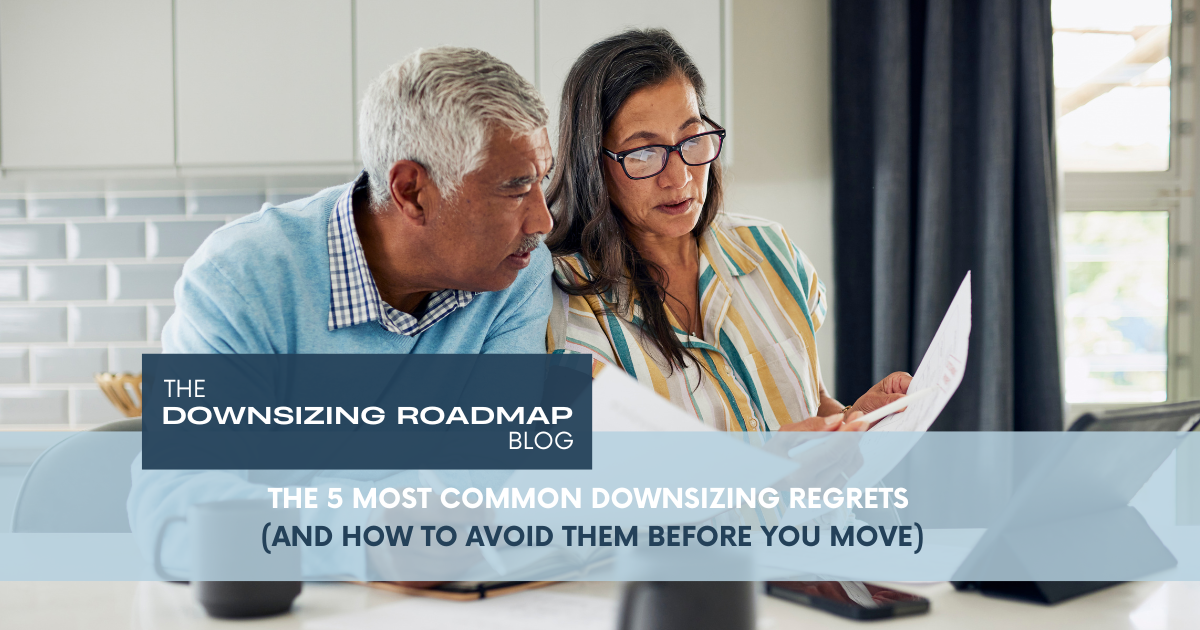
Here are the five most common downsizing regrets we see — and how we help families avoid them.
1. Waiting Too Long to Start
This is, without question, one of the most common downsizing regrets.
Many families plan to address it “someday.” However, someday often turns into a health event, a sudden relocation, or a timeline that feels compressed and stressful. As a result, decisions get made under pressure instead of from a place of clarity.
When downsizing begins earlier, people have more control. They can sort gradually. They can involve adult children in thoughtful ways. They can prepare their home strategically and protect their equity.
How we help prevent this:
We work with clients long before a move is urgent. Even if you are not planning to sell this year, we can help you outline a phased approach so progress happens at a sustainable pace. Starting early does not mean moving immediately. It means creating options.
If you are unsure where to begin, that is exactly the conversation we are here to have.
2. Letting Go of Meaningful Items Too Quickly
Another common downsizing regret involves sentimental belongings.
When people feel overwhelmed, they sometimes move too quickly through categories that deserve more thought. Later, they realize certain items carried more emotional meaning than they recognized at the time.
Regret in these situations is rarely about the object itself. It is about the story, the person, or the memory connected to it.
How we help prevent this:
We do not treat belongings as clutter to eliminate. We help you identify what truly matters, have intentional family conversations where needed, and document or pass down items thoughtfully. Slowing down in the right places prevents second-guessing later.
If this is an area that feels especially heavy, our article on sentimental furniture decisions may also be helpful:
https://downsizingroadmap.com/downsizing-and-sentimental-furniture-what-to-keep-without-guilt/
3. Underestimating the Emotional Side of Downsizing
Even when downsizing is the right decision, it can surface unexpected emotion.
A home represents decades of life. It holds routines, milestones, and identity. Consequently, some people interpret normal emotion as a sign that they are making a mistake.
In reality, emotion is part of transition. Feeling reflective or even sad does not mean the decision is wrong.
How we help prevent this:
Through our 5 Step Downsizing Method, we begin with vision and clarity before sorting begins. When people are grounded in why they are moving and what they are moving toward, emotional moments feel manageable instead of destabilizing.
You can hear more real-life conversations about this on our podcast page:
https://downsizingroadmap.com/downsizing-roadmap-podcast/
4. Spending Money in the Wrong Places Before Selling
Financial regret is another pattern we see.
Some homeowners invest heavily in updates that do not significantly increase value. Others avoid preparing the home properly and miss opportunities to maximize their return. Both situations usually stem from uncertainty about what truly matters in today’s market.
How we help prevent this:
Before you make improvements, we walk through your home with a strategic lens. As a real estate team serving Greater Dayton and Cincinnati, we evaluate what will impact price and what will not. Often, targeted preparation and decluttering create stronger results than major renovations.
If you are considering selling, we recommend having that conversation with us first so your decisions are aligned with real market data, not guesswork.
5. Choosing the Wrong Next Home for Your Lifestyle
Not all downsizing regret relates to what was left behind. Sometimes it relates to where someone landed.
We have seen clients choose a smaller home that reduced square footage but did not fully support their daily life. Storage felt tight. Hosting felt constrained. The location did not align with how they wanted to spend their time.
Downsizing should improve lifestyle, not simply reduce maintenance.
How we help prevent this:
Before touring properties, we help you define what your next chapter actually looks like. How often do you want overnight guests? How much yard work feels reasonable? What kind of proximity to family or community matters most?
Clarity about lifestyle leads to better home selection and fewer second thoughts later.
The Reality About Downsizing Regret
After guiding many families through this process, we can say this with confidence: long-term regret is uncommon when decisions are intentional.
The most common downsizing regrets tend to follow rushed timelines, avoided conversations, or unclear priorities. When people move at a steady pace and use a structured framework, they usually look back with relief rather than remorse.
If you are thinking about downsizing and want a clear place to start, you can download our free Downsizing Guide here:
https://downsizingroadmap.com/guide/
If you prefer to learn by listening, explore The Downsizing Roadmap Podcast for real conversations about the emotional and practical sides of simplifying:
https://downsizingroadmap.com/downsizing-roadmap-podcast/
We also share ongoing insights and updates on our Facebook page:
https://www.facebook.com/downsizingroadmap/
And you are always welcome inside our private Facebook group, Downsizing & Decluttering Community | Simplify Your Next Chapter, where members ask questions and support one another through the process:
https://www.facebook.com/groups/456269625127772
Wherever you are in the process, you do not have to navigate it alone.
Downsizing is not about shrinking your life. It is about making decisions that support the next stage of it with intention.