
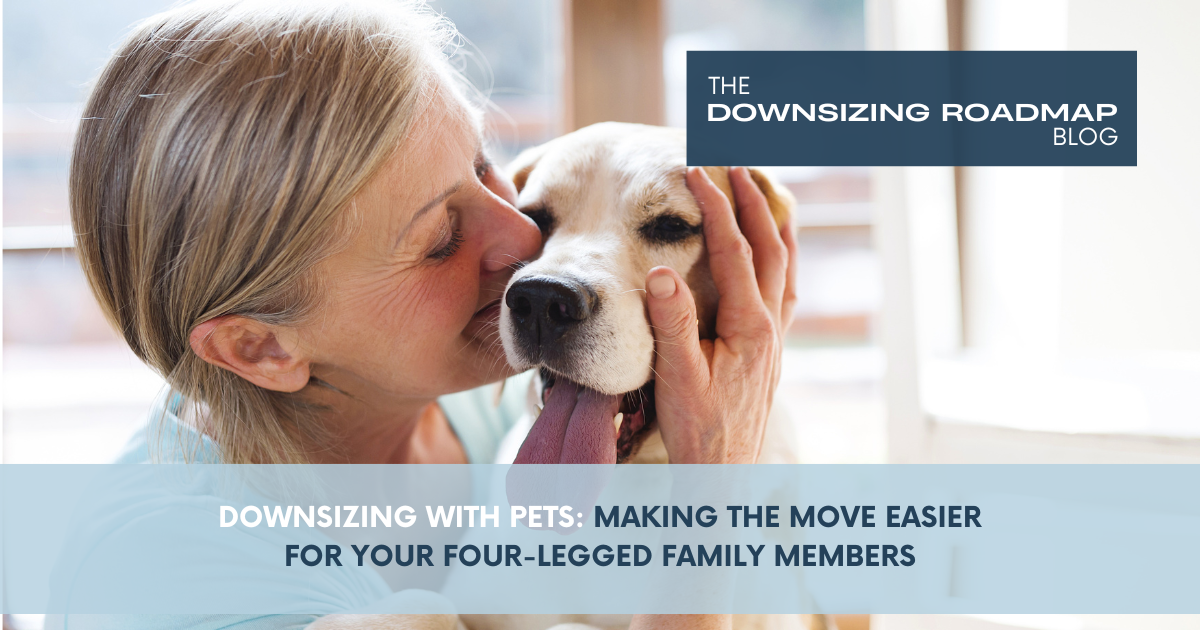
When you downsize, it’s not just about square footage—it’s about everyone who lives there, including the furry, feathered, or finned family members who make your house feel like home. Pets experience change differently than humans do, and while we can rationalize a move as “a simpler lifestyle,” they often just see boxes, strangers, and shifting routines. Fortunately, with some planning and patience, you can help your pets transition smoothly to your new, right-sized home.
1. Preparing Your Pet Before the Move
Before the boxes come out, start preparing your pets for change. Animals are sensitive to stress in their environment—so gradual adjustments can make a world of difference. Visit the vet early to update vaccinations, refill medications, and ask about records or referrals if you’re moving out of the area. For pets not used to car rides or carriers, take short drives so the move day isn’t their first long trip. Keep routines steady by feeding and walking them at consistent times even as packing ramps up. Predictability lowers anxiety.
🐾 Pro Tip: Pack your pet’s essentials last—like beds, food bowls, and toys—so they’re surrounded by familiar smells until the very end.
2. Choosing the Right Home for You—and Them
When evaluating new spaces, remember that pets have “criteria” too. Downsizing doesn’t mean compromising their comfort—it just means getting intentional. Look for easy outdoor access, such as a fenced yard, dog park nearby, or first-floor patio. Consider flooring and finishes—tile or LVP floors are easier to clean and resist scratches better than softwood or carpet. And research pet policies, since condos, apartments, and 55+ communities often have restrictions on breeds, weight limits, or number of pets. Before signing, check community rules to ensure your companions are welcome. It’s much easier to plan ahead than to appeal restrictions later.
3. Moving Day: Creating a Calm Zone
Moving day can be chaotic—doors opening and closing, boxes everywhere, and unfamiliar faces coming in and out. Keep your pet safe and stress-free by setting aside one quiet room with their bed, crate, water, and a favorite blanket while movers work. For especially anxious animals, consider a pet sitter or daycare so they can spend the day off-site. And when possible, transport them last—once everything else is ready—so they can enter their new space without confusion or chaos.
4. Settling In After the Move
Once you’re in your new home, resist the urge to unpack everything first—help your pet find their footing. Unpack familiar items early: their bed, bowl, and toys should come out before décor or furniture decisions. Explore together so your pet learns new sights, sounds, and smells with you by their side. And rebuild routine quickly—consistency in mealtimes, walks, and bedtime rituals helps pets feel secure. With time, most pets adapt beautifully. The key is balancing your excitement for this new chapter with their need for familiarity and reassurance.
5. Planning Ahead for Pet-Friendly Downsizing
As you think about your next move, remember—downsizing is about designing a life that fits who (and what) matters most. That includes your pets. Downsizing isn’t about losing space—it’s about creating the right environment for more freedom, comfort, and connection. Need guidance on choosing pet-friendly communities or simplifying a move with your pets in mind? The Downsizing Roadmap team can help you plan ahead.
Visit DownsizingRoadmap.com for free resources, or connect with us directly through our Downsizing Roadmap Facebook page for local tips, workshops, and upcoming events.