
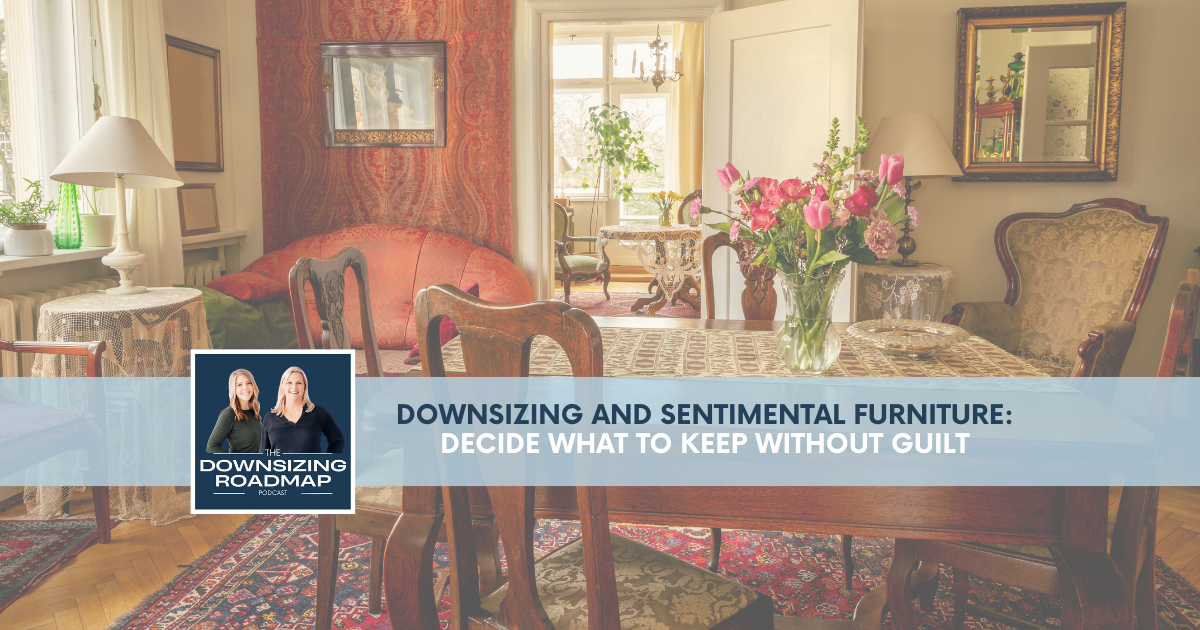
Downsizing and sentimental furniture is one of the most emotionally charged parts of the transition process, and it is something we see repeatedly with families across the country.
The challenge is rarely about whether the piece is beautiful or functional. The difficulty comes from what it represents. A dining table may symbolize decades of holidays. A desk may feel connected to a parent’s identity. A hutch may represent family tradition. When those items surface during downsizing, the decision feels far bigger than furniture.
That is where people stall.
Why Downsizing and Sentimental Furniture Decisions Feel So Complicated
National research shows that more than half of Boomers report keeping furniture out of guilt. That statistic reflects what we consistently hear from clients navigating major life transitions, estate clean outs, and moves into smaller homes.
Inherited furniture often carries three layers of pressure. It can be tied to grief for the person who owned it. It can reinforce your role within the family, especially if you are the one expected to preserve history. It can also create an internal sense of obligation that feels difficult to question.
When those layers combine, the decision becomes emotional before it becomes practical.
Across the country, families are discovering that downsizing is not simply about reducing square footage. It is about renegotiating identity and responsibility in a new season of life.
The Hidden Cost of Keeping Furniture Out of Obligation
When sentimental furniture stays primarily because of guilt, it often leads to one of two outcomes. Either the home is arranged around a piece that no longer fits the lifestyle of the current owner, or the item is moved into storage where it occupies space without serving a meaningful purpose.
Over time, that decision consumes square footage, mental energy, and clarity, which undermines the very reason many people choose to downsize in the first place. The goal of downsizing is to create a home that supports the life you are actively living, not one that feels anchored to obligation.
We see this pattern in urban condos, suburban homes, rural properties, and retirement communities alike. The setting may change, but the emotional weight of inherited furniture remains consistent.
A Practical Framework for Deciding What to Do With Inherited Furniture
When families feel stuck, clarity begins with better questions rather than immediate answers.
Would I choose this piece if it had no family history attached to it?
Does this support the way I live now and the home I am moving into?
Am I keeping this from love, or am I keeping it to avoid guilt or potential conflict?
These questions separate memory from obligation and help shift the focus toward alignment.
It is possible to honor someone’s life without structuring your home around their belongings. In fact, many families find greater peace when they preserve the story intentionally rather than preserving every object.
If you are still building confidence around downsizing decisions, start with this resource:
https://downsizingroadmap.com/downsizing-confidence-mindset-shifts/
When Family Dynamics Surface Through Furniture
Downsizing and sentimental furniture decisions frequently expose long-standing family roles. One sibling may decline an item and unintentionally create hurt feelings. Another may agree to take multiple pieces and feel resentment later. What appears to be a disagreement about furniture often reflects deeper conversations about fairness, grief, and responsibility.
Families across the country experience this dynamic during estate transitions. Recognizing that the tension is emotional rather than purely logistical can prevent reactive decisions and allow for more thoughtful conversations.
The story of an item can belong to everyone, even if the physical ownership does not.
Preserving Meaning Without Preserving Everything
Letting go of inherited furniture does not require erasing its significance. In many cases, the memory attached to the item carries more weight than the item itself.
Photographing the piece, documenting its story, recording an audio memory, or preserving a small detail can allow the meaning to continue without requiring the full physical structure to move into the next home.
This approach allows families to honor history while still creating space for the next chapter.
Making Peace With the Decision
Downsizing and sentimental furniture decisions become manageable when you move from reacting emotionally to evaluating intentionally. The objective is not to strip your home of meaning. The objective is to ensure that your environment reflects your present life rather than unresolved obligation.
We recently explored this topic in depth, including real family scenarios and practical decision strategies, which you can listen to HERE.
If you are navigating downsizing and sentimental furniture and want guidance from a team that works with families nationwide on these transitions, you can connect with us here:
https://www.facebook.com/downsizingroadmap/
At Downsizing Roadmap, we work with families nationwide navigating the emotional and practical sides of downsizing, including inherited furniture, estate transitions, and major life moves. These decisions are rarely simple, but they are manageable with the right framework. Get our FREE Downsizing Guide to get started.