
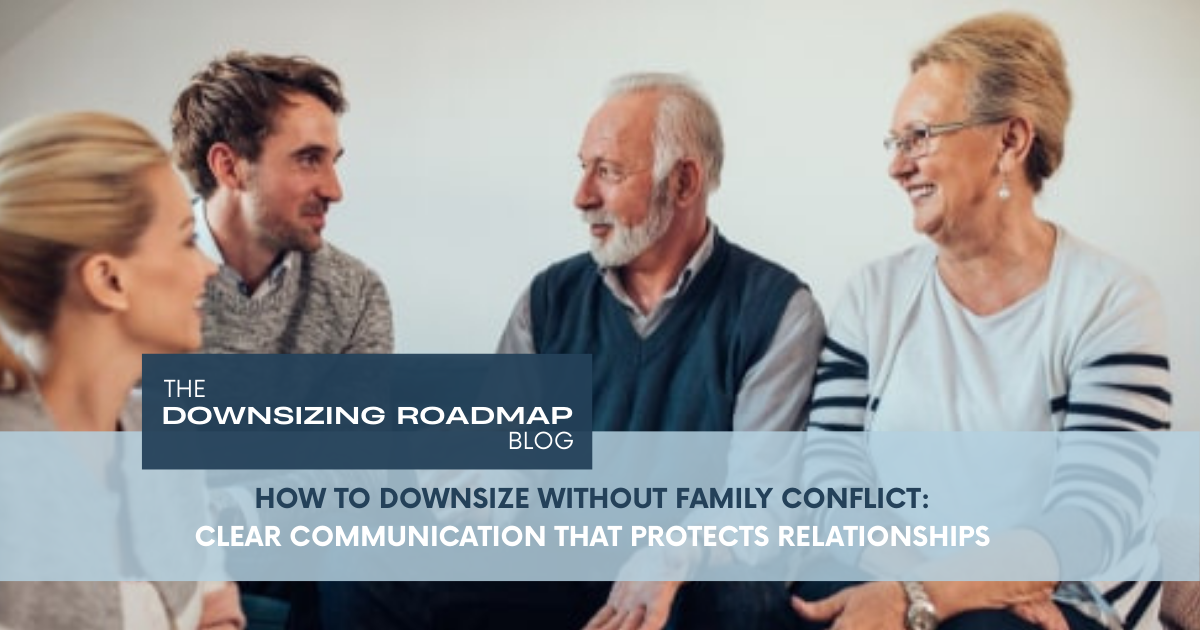
One of the biggest fears people have when considering downsizing isn’t about letting go of belongings—it’s about how family will react. Adult children may worry about heirlooms. Siblings may disagree. Loved ones may resist change altogether. The good news is that it is possible to downsize without family conflict. While emotions are natural, tension is not inevitable when communication is thoughtful and proactive.
Why Downsizing Often Triggers Family Tension
Downsizing decisions often stir emotions because they represent more than just stuff. For many families, belongings symbolize history, identity, and shared memories. As a result, conversations can quickly become emotional—even when everyone has good intentions.
Additionally, family members may have different expectations. Some assume they’ll inherit certain items. Others worry about a parent’s safety or independence. When these concerns go unspoken, misunderstandings grow.
However, conflict usually comes from assumptions, not the downsizing itself.
Start the Conversation Before Decisions Are Final
One of the most effective ways to downsize without family conflict is to talk early—before items are gone and emotions are heightened. Sharing your goals helps loved ones understand why you’re making changes, not just what you’re doing.
For example, explaining that you want less responsibility, easier maintenance, or more freedom reframes downsizing as a positive life decision rather than a loss.
When family members feel informed instead of surprised, trust grows.
Be Clear About What You Want—Not Just What You’re Letting Go
Many downsizers focus conversations on what they’re giving up. Instead, shift the focus to what you’re moving toward.
Are you seeking:
- Less home upkeep?
- More time with family?
- A safer, more manageable living environment?
Clarity reduces fear. When loved ones understand your priorities, they’re more likely to support the process—even if emotions still surface.
Set Gentle but Firm Boundaries
While family input can be valuable, it’s important to remember that downsizing decisions ultimately belong to you. Trying to please everyone often leads to frustration and stalled progress.
A helpful approach is to listen openly while still maintaining boundaries. You can acknowledge feelings without changing decisions. This balance helps preserve relationships while keeping your downsizing plan on track.
Address Sentimental Items Thoughtfully
Heirlooms and sentimental belongings are often the most emotionally charged. Rather than deciding everything at once, consider slowing this part of the process down.
Some families benefit from:
- Sharing stories before items are passed on
- Allowing loved ones time to express interest
- Documenting memories through photos or written notes
Handling these items with intention often prevents resentment later.
Why Protecting Relationships Matters More Than Speed
Downsizing doesn’t need to happen quickly to be successful. In fact, slowing down communication often leads to smoother transitions and stronger family support.
When conversations are clear and compassionate, downsizing becomes a shared understanding rather than a source of division.
If you’re navigating these conversations—or supporting a loved one through them—our community offers ongoing guidance and encouragement.
Join us on Facebook here:
https://www.facebook.com/downsizingroadmap/