
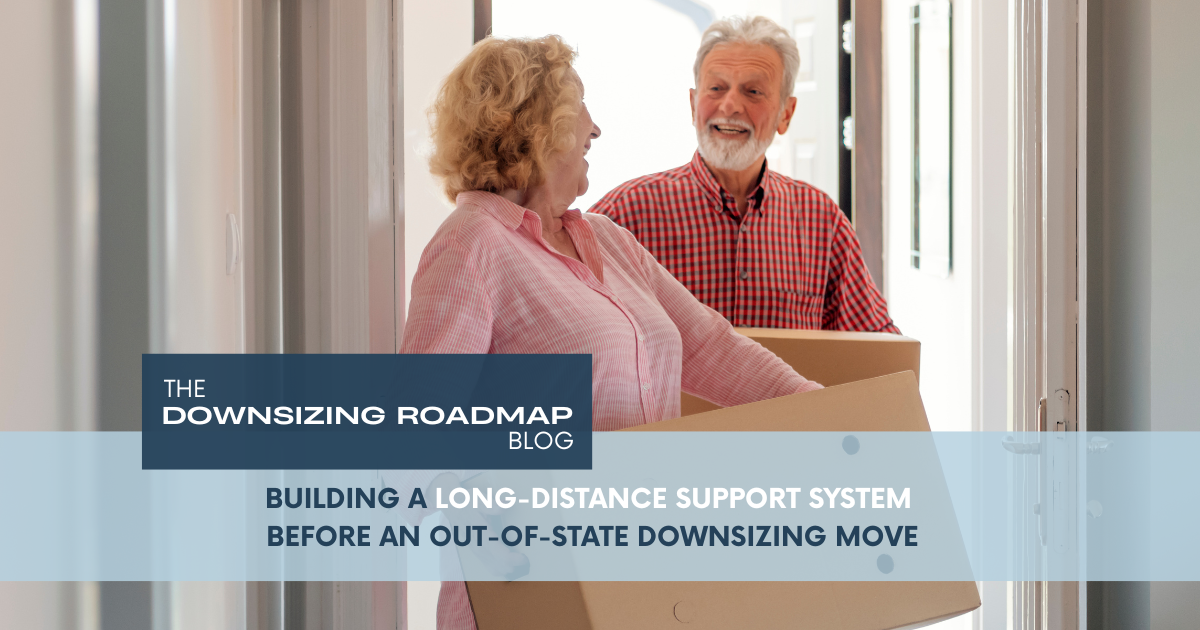
When people plan an out-of-state downsizing move, they usually focus on logistics first—timelines, housing options, and what to do with belongings. That makes sense. However, one of the most overlooked pieces of a successful transition is having the right people in place before you go.
A long-distance downsizing move changes how you access help, advice, and reassurance. Because of that, building a long-distance support system early can make the difference between a move that feels overwhelming and one that feels steady.
Why a Long-Distance Support System Matters When Downsizing
Downsizing is already layered with decisions. When distance is added, small challenges can feel much bigger. For example, if something unexpected comes up with your home, paperwork, or belongings, you may not be able to handle it in person.
Additionally, emotional support matters just as much as practical help. Leaving familiar places, routines, and relationships can feel heavier when you’re doing it from afar. A thoughtful support system helps bridge that gap.
Who Should Be Part of Your Long-Distance Downsizing Support Network
Rather than relying on one person to do everything, it helps to build a small, dependable group. Each role doesn’t need to be complicated, but clarity is important.
A trusted local contact can act as eyes and ears on the ground. This might be a family member, close friend, or neighbor who can check in on the home, attend appointments, or relay updates.
Professional partners are equally important. Real estate agents, estate sale professionals, organizers, and moving coordinators can help manage details you can’t easily oversee from another state.
Finally, decision support matters. This could be a family member or advisor who understands your goals and can talk things through when choices feel heavy or emotional.
How to Build Trust From a Distance Before You Move
It’s tempting to wait until after a move to establish connections, but doing this work early creates stability.
Start by having clear conversations about expectations. Who can help with what? How often will you communicate? What decisions need your approval versus theirs?
Next, use video calls whenever possible. Seeing faces builds confidence and reduces misunderstandings, especially when discussing important details.
It also helps to document decisions. Shared notes, timelines, and contact lists keep everyone aligned and reduce stress later.
Planning for Gaps Before They Become Problems
One of the smartest things you can do is identify where support isn’t in place yet.
For instance, if your main contact becomes unavailable, who steps in? If a home-related issue arises after you’ve left the state, who handles it?
Thinking through these scenarios ahead of time doesn’t mean expecting problems—it simply means being prepared.
Where This Fits Into the Bigger Downsizing Picture
All things considered, downsizing well isn’t just about less space. It’s about creating a life that feels supported, even when geography changes.
This week’s episode of the Downsizing Roadmap Podcast explores the broader considerations of relocating out of state, including planning ahead and understanding what changes with distance. Listening alongside this planning step can help everything feel more connected and intentional. You can listen to the full episode HERE.
Call us when you’re ready to start planning your out-of-state move. Our network of agents across the country is ready to help.