
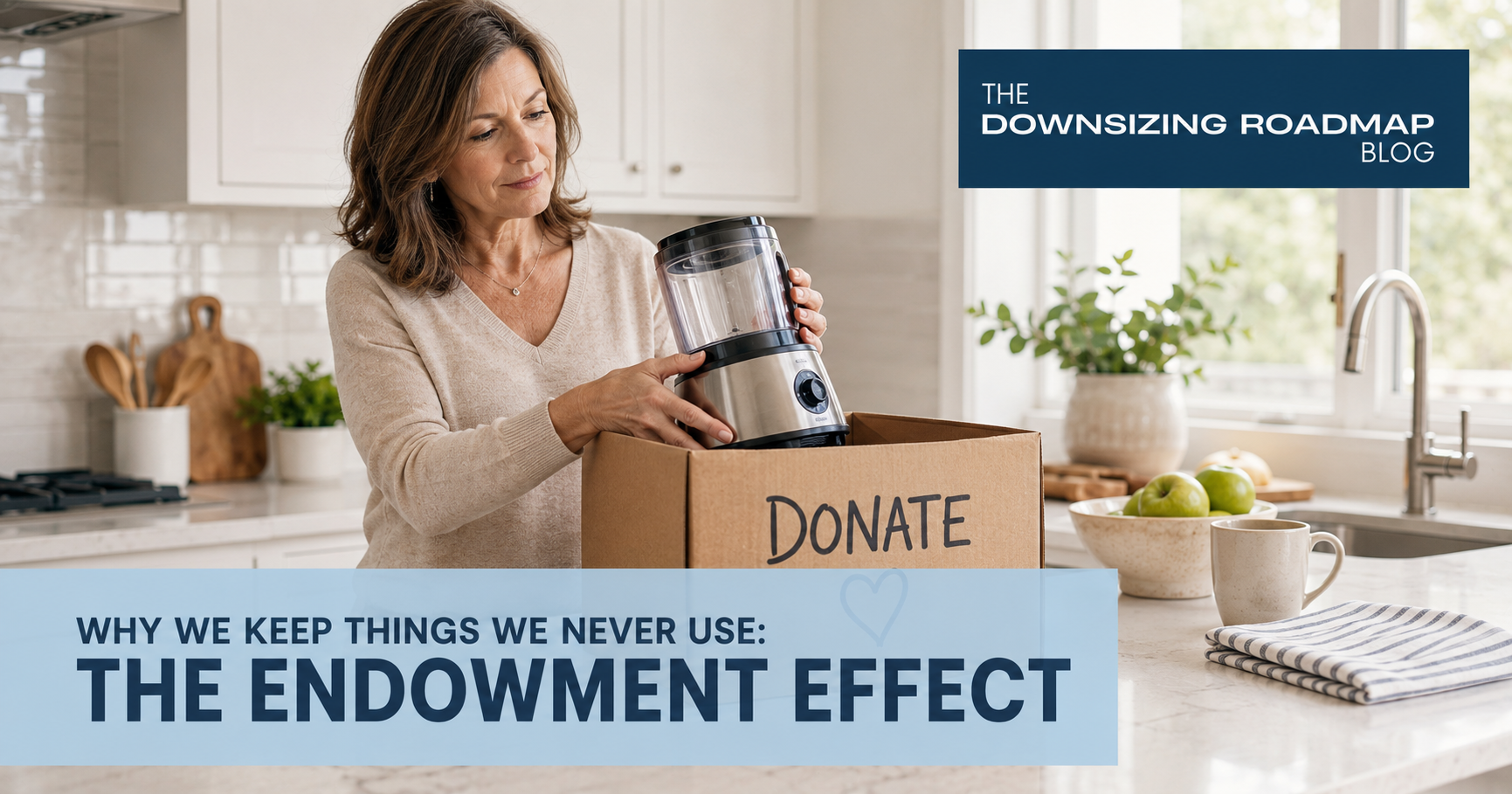
Why we keep things we never use comes down to a mental pattern called the endowment effect. The moment something becomes yours, your brain assigns it extra value that has nothing to do with usefulness. That hidden math explains the bread maker in the cabinet, the boxes in the basement, and the clothes you have not worn in a decade.
What Is the Endowment Effect?
The endowment effect is a bias that makes people value an item more simply because they own it. Behavioral economists Daniel Kahneman, Jack Knetsch, and Richard Thaler proved it with a now famous coffee mug experiment: https://en.wikipedia.org/wiki/Endowment_effect. People given a mug demanded roughly twice as much to sell it as buyers would pay for the identical mug. Nothing changed except ownership, and ownership alone doubled the price in the seller’s mind.
Why We Keep Things We Never Use: What Is the Brain Doing?
Two forces work together here, and neither one has anything to do with willpower. The first is loss aversion, which means losing something feels about twice as painful as gaining it feels good. The second is identity, because belongings slowly become part of how you see your own story. Letting go of the camping gear can feel like admitting the camping years are over, even if the tent has not left the garage since 2019.
How Does This Show Up Around the House?
The pattern usually hides inside a few familiar phrases you have probably said out loud. “I might need it someday” is almost always loss aversion doing the talking. The imagined loss of letting it go feels bigger than the real cost of storing it for years. “It was expensive” is the sunk cost trap, where money already spent keeps demanding shelf space. “It was a gift” adds guilt to the mix, even though the giver never intended a lifetime storage obligation. We hear all three of these in nearly every home we visit, often within the first hour.
Can Understanding Why We Keep Things We Never Use Make Letting Go Easier?
Yes, because naming the pattern takes away its power and removes the shame from the process. Once you understand why we keep things we never use, you can start correcting for the inflation. One reliable correction is the buy-it-again test, and it works on almost any category. If you spotted this exact item in a store today, would you pay full price to bring it home?
That question strips ownership out of the decision, so the item competes on usefulness alone. An honest no points the way forward, and most answers are honest nos.
What Actually Helps When You Feel Stuck?
Momentum beats motivation, so begin in the categories with the least emotional pull. Expired pantry items, duplicate tools, and worn out linens rarely trigger a strong attachment response. Photographs and family pieces belong at the end of the process, after your decision muscles have had practice. Another useful tactic is to look at items rather than hold them, because physical touch measurably deepens attachment.
For the true maybes, a dated holding box settles the debate without forcing a decision today. Pack the uncertain items, write the date on the lid, and set a six month reminder on your phone. A box that stays sealed until the reminder goes off has already answered the question for you.
What Do People Ask Most About Why We Keep Things We Never Use?
Is it normal to feel guilty about letting go of gifts? Yes, and gift guilt may be the most common emotional snag in the entire process. A gift does its job at the moment of giving, when the connection lands. Keeping the object forever was never part of the deal, and the giver rarely expects it.
Does the endowment effect explain why my parents keep everything? Often it does, because the effect compounds with every additional decade of ownership. A house full of fifty year old belongings carries far more attachment weight than a young apartment ever could. Patience and small steps work better than pressure when you offer to help them sort.
Will I regret letting go of things I never use? Probably not, because regret over donated items happens far less often than people fear. Most people struggle to remember what left the house within a few months of donating. The anticipation of regret almost always outweighs the actual experience of it.
Should I sell my items instead of donating them? Sell only the pieces with genuine market value, like quality furniture or working electronics. The endowment effect inflates asking prices too, which is why so many listings sit unsold for months. Donating moves most household items out the door faster and feels just as rewarding.
Why we keep things we never use stops feeling like a personal failing once you see the mechanics behind it. Your brain inflates the value of what you own, and that inflation is normal, measurable, and correctable. We built our whole approach around that idea, because a plan that respects how the brain works will always beat a plan that fights it.
If you’re thinking about downsizing and want a clear place to start, you can begin with our Free Downsizing Guide: https://downsizingroadmap.com/guide/
If you prefer to learn by listening, you can explore The Downsizing Roadmap Podcast: https://downsizingroadmap.com/downsizing-roadmap-podcast/
We share ongoing insights on our Facebook page: https://www.facebook.com/downsizingroadmap/
You’re also welcome inside our private Facebook group, Downsizing & Decluttering for You or Your Parents | Downsizing Roadmap, where people ask questions and share experiences: https://www.facebook.com/groups/downsizingroadmapcommunity
And if you’re ready to talk through your situation, reach out here: https://downsizingroadmap.com/help/
Jodi Rosko and Heather Fisher and Downsizing Roadmap work with clients every day to help them move through downsizing with a clear plan, so progress can happen without creating more stress along the way.