
“Everyone just dropped their boxes off at my house—because I had a basement.”
If you’ve ever found yourself surrounded by tubs of family heirlooms, photo albums, and “just in case” boxes from relatives long gone, you’re not alone. Many people—especially women in midlife—become the default family storage unit without even realizing it. Over time, the emotional labor of holding your family’s history can become heavy, particularly when it wasn’t something you signed up for.
This article explores why becoming the family storage unit is emotionally draining and how to create healthy boundaries—with empathy and confidence.
How It Happens (Without You Realizing It)
Perhaps you had extra space.
Maybe you were the “organized one.”
You might have lived closest to Mom or Dad.
Or you were simply sentimental.
In many cases, you just didn’t say no fast enough. Consequently, your spare room, attic, or basement began filling with everyone else’s boxes. As a result, you’re not only storing objects—you’re also holding unspoken expectations, nostalgia, and even old family tensions.
The Hidden Emotional Toll of Being the Family Storage Unit
Being the keeper of everyone’s belongings often leads to multiple layers of stress:
- Emotional overwhelm – Each item feels like a story you’re now responsible for remembering.
- Family pressure – “Don’t throw that away! That was Grandma’s!” (even though no one else offered to take it).
- Guilt – You worry that letting go means dishonoring someone’s memory.
- Decision fatigue – “Do I keep this? Toss it? Ask my sister?”
Eventually, you may feel buried, resentful, or stuck in the past. Those feelings are not exaggerated—you’re carrying an invisible emotional weight that few people recognize.
Five Signs It’s Time to Set Boundaries
Recognizing the signs is an important first step toward reclaiming your peace of mind:
- You’ve become the default drop zone for everyone’s “I don’t know what to do with this.”
- You’re hesitant to declutter without a sibling’s approval.
- You feel burdened rather than connected when you look at the items.
- The boxes have overtaken rooms you could be using for something meaningful.
- You’re beginning to feel shame or resentment for not “doing anything with it yet.”
Once these patterns appear, it’s time to make intentional choices about what stays and what goes.
How to Set Boundaries With Family (Without Starting World War III)
Healthy boundaries protect both relationships and emotional well-being. Therefore, being direct and kind helps avoid defensiveness. Try these approaches:
1. The “Claim It or Release It” Message
“I’m starting to go through some of the family things we’ve stored. If there’s anything specific you’d like, please let me know by [date]. Otherwise, I’ll assume you’re okay with me making decisions on how to release them.”
2. The “I Can’t Be the Keeper Anymore” Conversation
“I’ve held onto these items for a long time, but I can’t continue being the family storage unit. I’d love for others to take what’s meaningful to them.”
3. The “Shared Digital Legacy” Suggestion
“Instead of everyone keeping boxes, let’s preserve the most important photos and stories digitally so we can all access them—without needing to store everything.”
Altogether, these messages foster cooperation and shared responsibility, making it easier to protect your time and emotional space.
Letting Go Doesn’t Mean Forgetting
It’s vital to remember that letting go doesn’t erase your family’s story. On the contrary, it helps preserve what truly matters.
Repeat these affirmations as reminders:
- “I’m preserving the memory, not the mass.”
- “This isn’t being discarded—it’s being released.”
- “Just because someone saved it, doesn’t mean I have to.”
By releasing the excess, you ensure the most meaningful memories can be honored, shared, and enjoyed—rather than buried in forgotten boxes. In essence, you’re curating your family’s history, not erasing it.
You’re Not Alone
If this feels familiar, take heart. You’re performing emotional work that often goes unseen. It’s perfectly valid to feel tired, conflicted, or overwhelmed. Even so, it’s equally valid to say: enough. You deserve a home and a life that feel light again.
Ready to get started? —request our FREE Downsizing Guide at https://www.downsizingroadmap.com
Related Reading & Listening
Related Podcast Episode:
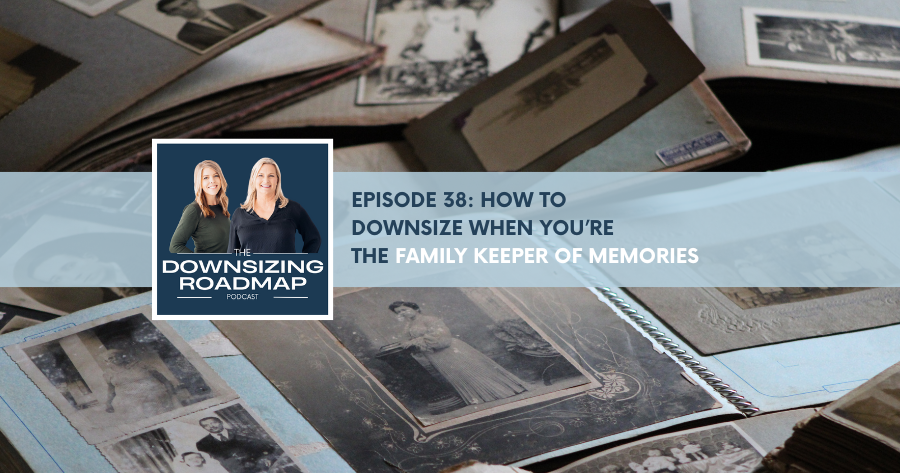
How to Downsize When You’re the Family Keeper of Memories: https://www.buzzsprout.com/2439559/episodes/17970389
Related Blog Article:
What to Keep When the Kids Don’t Want Your Stuff: https://downsizingroadmap.com/what-to-keep-when-the-kids-dont-want-your-stuff/
For more resources, follow us on Facebook at Downsizing Roadmap: https://www.facebook.com/downsizingroadmap/