
Why Are These Three Spaces So Hard to Tackle?
If you’ve been avoiding your garage, basement, or attic, you’re not behind and you haven’t failed. These spaces collect decades of postponed decisions, and without a clear plan, they stay that way. All three are absolutely manageable with the right approach, and clearing them creates one of the biggest mental shifts in the entire downsizing process.
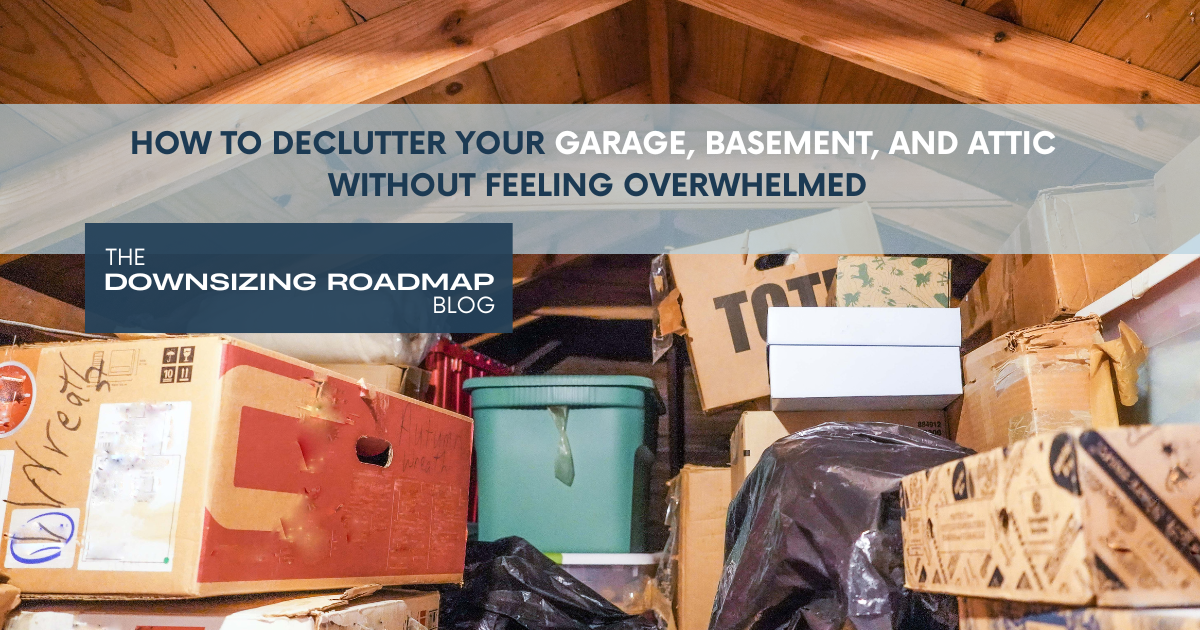
Garages, basements, and attics are uniquely difficult because they hold everything that never had a clear home anywhere else. Holiday décor ends up next to childhood keepsakes, tax records from 2003, and a treadmill nobody has touched since 2011. Unlike a kitchen drawer or a bedroom closet, these spaces demand a completely different category of thought with every bin you open. That constant gear-shifting is what creates decision fatigue so quickly.
There’s also an emotional layer that most decluttering advice skips entirely. Think of these spaces as your identity archive. They hold hobbies from earlier chapters of life, items inherited from people you loved, and projects that never got off the ground. Every box represents a decision that got postponed, and opening them means facing that backlog all at once.
Beyond the emotional weight, there’s what you might call the invisibility problem. When you don’t see a space every day, your brain stops treating it as urgent. Before long, you’re two months from a move and the garage alone feels like a full-time job.
What Happens When You Keep Waiting?
Delaying these spaces allows a few specific problems to quietly grow. Volume increases because items keep flowing in with no system pushing anything out. Safety risks build up gradually too — stacked boxes near furnace intakes, outdated chemicals, blocked pathways, and tripping hazards that are especially concerning for older adults. The emotional weight of knowing the project exists grows heavier with every passing season.
Addressing the garage, basement, and attic early makes the rest of your home feel more manageable, especially if downsizing is anywhere on your horizon. These three spaces often determine whether a move feels organized or overwhelming. Getting ahead of them gives you options instead of pressure.
How Do You Start Without Getting Overwhelmed?
The single most important thing to understand is that you should never approach these spaces as one giant project. Trying to clear the whole garage in a single weekend almost always leads to burnout and a bigger mess than where you started. Breaking each space into micro-zones and giving each zone its own focused session works far better.
The garage, for example, might break into zones for tools, gardening supplies, sports gear, holiday bins, and household overflow. Your basement lends itself to zones for memory boxes, old paperwork, electronics, and pantry overflow. Attic zones might cover seasonal décor, hand-me-downs, and miscellaneous bins separately. Each one gets its own pass, on its own day.
A two-hour win approach tends to work well once you have your zones mapped. Choose one zone, finish it fully, then stop for the day. That sense of completion builds momentum, and momentum is genuinely what carries people through these spaces to the finish line.
Before starting, get clear on your goal for each space. Are you creating functional storage, preparing for a home sale, or simply making the space safe to walk through? Your answer changes what you keep, what you release, and how you organize what remains.
What Should You Actually Let Go Of?
Working through each space becomes easier when you have a clear framework rather than evaluating every item from scratch. Garages tend to hold things most people no longer need — dried paint, duplicate tools, outgrown sports equipment, and old chemicals. These categories move out quickly when you give yourself permission to release them responsibly.
Basements carry the most sentimental weight of the three. Collections that made perfect sense 20 years ago, including inherited china, figurines, and vintage furniture, often outlast their practical or emotional value by decades. A memory box limit works well here: each person gets one or two bins for sentimental items, and everything beyond that requires a real decision.
Attics present a challenge that surprises many people. Extreme heat and cold actively ruin things people believe they’re preserving. Photos, candles, stuffed animals, and old electronics deteriorate faster than most homeowners expect. A good rule: if you wouldn’t leave it in a parked car on a hot August day, your attic isn’t the right place for it either.
How Do You Handle the Emotional Weight of These Decisions?
Most people get stuck here, so this part deserves real attention. The mindset shift that creates the most clarity is moving from “I should keep this” to “does this support the life I’m building now?” Those aren’t the same question — one generates guilt and the other generates direction.
Releasing physical items doesn’t mean releasing memories. Your memories belong to you and they don’t live inside a storage bin. Clearing these spaces makes room for a home that reflects who you are today, rather than who you were in every previous chapter at once.
Inherited items deserve special consideration. Keeping something out of obligation isn’t the same as honoring someone. Consider whether a family member might genuinely want the item, whether photographing it before releasing it would feel meaningful, or whether a local organization tied to that person’s interests could give it a purposeful home.
What Does Life Actually Look Like After Clearing These Spaces?
People consistently describe clearing the garage, basement, and attic as the part of downsizing that produces the biggest mental shift. These spaces create a low-grade sense of unfinished work that hums in the background of daily life. When that disappears, most people feel lighter than they expected, not just physically but emotionally.
Real practical benefits follow as well. Fewer duplicates mean less money spent replacing things you couldn’t locate. Eliminating off-site storage adds up financially over time. A clean, organized garage and basement also improve resale value when you’re ready to list your home, and usable space for parking or a workspace improves daily life in immediate ways.
How Do You Keep These Spaces From Filling Back Up?
Once a space is cleared, a few consistent habits protect that progress. A one-in, one-out rule for gear-heavy categories like sports equipment or holiday décor prevents the gradual creep that undoes your work. Scheduling a seasonal sweep each spring and fall keeps things from quietly building again. Dating your bin labels also helps, because a box that hasn’t been opened in four years is telling you something.
Most importantly, bring these spaces into your regular home maintenance rhythm. Annual resets keep them manageable rather than letting them become a crisis project you dread facing again.
Jodi and Heather cover all three spaces in detail in Episode 64 of The Downsizing Roadmap Podcast: The Big Three: How to Finally Tackle Your Garage, Basement & Attic. That episode walks through specific strategies for each space and is worth the listen if you’re ready to move on this.
The Downsizing Roadmap Guide is a good place to start if you’re working through a larger downsizing process and want a clear step-by-step framework. Ready to talk through your specific situation? Reach the team directly at downsizingroadmap.com/help.
Frequently Asked Questions
Where should I start if my garage, basement, and attic all need attention?
Start with whichever space causes the most daily friction or creates the most dread. Clearing that one first tends to build the strongest momentum. When all three feel equally overwhelming, the garage is usually the best entry point because it tends to hold the highest percentage of items you can release quickly.
How do I handle inherited items I don’t want but feel guilty letting go of?
Separating the memory from the object helps more than most people expect. You can honor someone without keeping everything they owned. Consider whether another family member would genuinely want the item, whether photographing it before it leaves would feel meaningful, or whether donating it to a cause that person cared about would give it a purposeful ending.
Is it worth hiring help for these spaces, or should I do it myself?
Both approaches work depending on your situation. Large volume, heavy items, or emotional weight that makes decisions difficult alone are all good reasons to bring in professional support — an organizer, estate company, or junk removal service. A trusted partner, whether family or professional, also keeps the process from stalling out.
How long does it realistically take to clear these spaces?
The timeline varies depending on how much has accumulated over the years. Working in two-hour focused sessions by micro-zone produces the most sustainable results for most people. Some finish a garage zone in a single session while others need several weeks to work through a full basement. Consistency matters more than speed.
My attic has things I’ve been storing for years. How do I know what’s actually worth keeping?
Ask yourself whether you would go looking for this item if you needed it, and whether you’d even remember it’s there. When the honest answer to both is no, the item has been stored by default rather than by intention. Also check for heat and moisture damage, since many things stored in attics for years are no longer in usable condition regardless of how you feel about them.
If you’re thinking about downsizing and want a clear place to start, you can begin with our Free Downsizing Guide:
https://downsizingroadmap.com/guide/
If you prefer to learn by listening, you can explore The Downsizing Roadmap Podcast:
https://downsizingroadmap.com/downsizing-roadmap-podcast/
We share ongoing insights on our Facebook page:
https://www.facebook.com/downsizingroadmap/
You’re also welcome inside our private Facebook group, Downsizing & Decluttering Community | Simplify Your Next Chapter, where people ask questions and share experiences:
https://www.facebook.com/groups/456269625127772
And if you’re ready to talk through your situation, reach out here:
https://downsizingroadmap.com/help/
Jodi Rosko and Heather Fisher and Downsizing Roadmap work with clients every day to help them move through downsizing with a clear plan, so progress can happen without creating more stress along the way.