
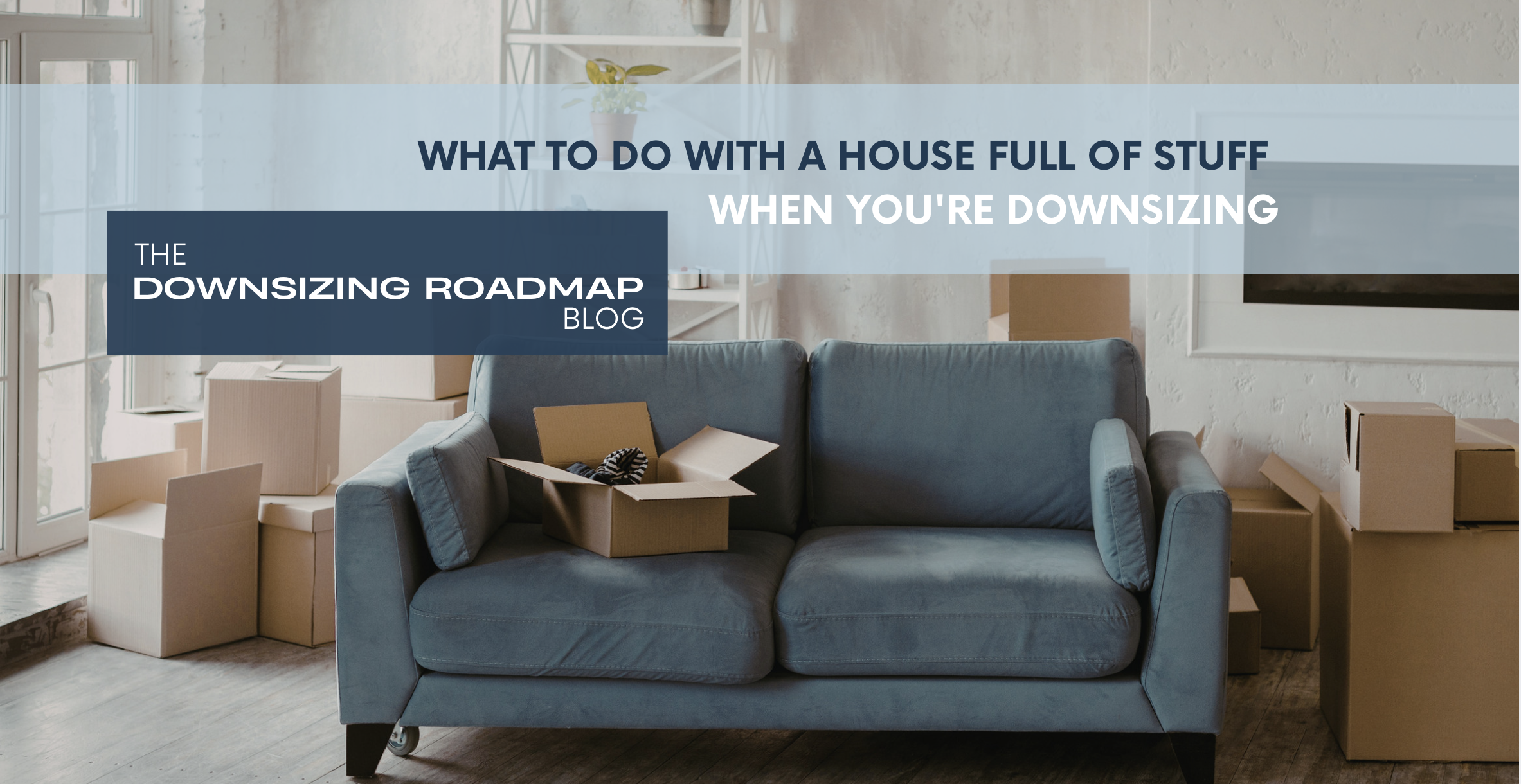
If you’re wondering what to do with a house full of stuff when you’re downsizing and where to even begin, we want you to know you are not alone, and this is exactly the moment where having a clear process matters most. Most of the clients we work with who are downsizing don’t struggle because they’re too attached to their belongings. They struggle because no one has ever shown them how to work through a full home systematically without burning out halfway through.
Why does a house full of stuff feel so impossible to sort through?
When you’ve lived in a home for ten, twenty, or thirty years, every drawer and closet holds a decision you haven’t made yet. The sheer volume isn’t just a physical challenge. It’s an emotional one too. You’re not just sorting objects when you get in there. You’re sorting through decades of choices, relationships, and identities. That’s why most of the clients we work with stall out in the first room they attempt. They treat downsizing like a weekend project when it actually requires a structured plan that honors both the practicality and the emotion of the process.
Consequently, the people we see move through this most successfully aren’t the ones who feel the least. They’re the ones who have a clear framework before they start.
Where should you start when you don’t know where to start?
We always recommend starting with what’s easiest, not what feels most important. In other words, begin in a low-stakes zone, like a bathroom cabinet, a utility closet, or the garage storage you haven’t touched in years. This builds momentum without the emotional weight of the master bedroom or the family photos.
From there, we suggest working room by room, not category by category. The popular method of pulling everything out by type, all books at once, all clothing at once, works well in theory. In practice, it creates chaos in a home that’s already feeling overwhelming. Room by room keeps the process contained. You make decisions in context, which tends to produce better results and fewer regrets.
Furthermore, the early wins matter. Each room you complete is evidence that the process works, and that evidence keeps you moving forward.
How do you decide what to keep, sell, donate, or let go?
Think about where you’re going, not where you’ve been. The question we ask clients isn’t whether you love something. The question is whether it fits, functions, or has a real place in your next home. When you anchor every decision to the life you’re moving toward, the choices get cleaner.
For items you’re unsure about, a simple sorting method helps. We use four categories with clients: keep, donate, sell, and let go of entirely. Give yourself a firm but reasonable timeframe for items that land in the sell pile. If something hasn’t sold within thirty days, it moves to donate. That single rule prevents the sell pile from becoming a permanent fixture in your hallway for six months.
For sentimental items, we often suggest taking a photo before you release them. Having that record means you haven’t erased the memory, just released the object, and that distinction genuinely reduces the anxiety of letting something go. Starting those conversations with family members early, before you’re under timeline pressure, also makes everything easier for everyone involved.
Additionally, some items belong with specific people and simply need a conversation to get there.
What can you do with larger items or collections you don’t want to keep?
Estate sales, consignment shops, and online marketplaces all serve different purposes depending on what you have. Estate sales work well when you have a significant volume of items across multiple categories. Consignment works better for higher-value furniture or collectibles. Online platforms work if you have time to manage listings and local pickup.
However, what we tell clients is that the goal isn’t to maximize every dollar from every item. The goal is to move through this process without it consuming your life. Sometimes donating is the right call because it’s efficient, it helps someone else, and it keeps your momentum going. Organizations like Habitat for Humanity ReStores accept furniture and building materials. Many local charities accept clothing, kitchenware, and household goods.
If you have a collection that feels too large to manage on your own, an estate sale company can handle the entire process for you. They typically work on commission, so the barrier to getting started is low.
How do you avoid running out of energy before you finish?
Work in short sessions, not long marathons. Two to three focused hours tends to produce better decisions than an entire exhausted day. When you’re tired, you start keeping things you don’t need because making a decision feels harder than just putting something back.
We encourage clients to schedule decluttering sessions the same way they’d schedule any other commitment. Block the time, treat it as non-negotiable, and stop when the session ends, even if you feel like you could keep going. Consistent short sessions build a sustainable pace.
Moreover, give yourself permission to feel something during this process. Grief, relief, nostalgia, and joy can all show up in the same afternoon. That’s completely normal and doesn’t mean you’re doing it wrong. It means you lived fully in the home you’re leaving, and that matters.
Frequently Asked Questions
How long does it take to sort through a house full of stuff when you’re downsizing?
Most clients underestimate this significantly. A full home typically takes three to six months when you’re working at a sustainable pace and managing everything else in your life at the same time. Starting earlier than you think you need to is one of the most consistently helpful decisions we see clients make.
What if my family members disagree about who gets certain items?
This is one of the most common pain points we hear about in the downsizing process. Having those conversations with family members before you begin sorting, rather than in the middle of it, tends to go much better. Giving people the opportunity to come see the home and identify items they want, before those items are already spoken for, prevents most of the conflict.
Should I hire a professional organizer or do this myself?
It depends on the size of your home, your timeline, and how much support you want. Some people move through this process well on their own with a clear plan. Others benefit significantly from having someone alongside them who isn’t emotionally attached to the items and can help them stay focused. There is no wrong answer here.
Is it okay to keep more than I planned to?
Absolutely. The goal was never to get rid of as much as possible. What matters is that you move into your next home with what genuinely serves your life there. If keeping more than you initially planned still fits your next space, that’s a good outcome, not a failure.
What do I do with items that have no sentimental value but aren’t worth selling?
Donate them. Your time and energy have real value, and spending hours trying to sell something for five dollars rarely makes sense when you’re in the middle of a major life transition. Donate, take the tax receipt if applicable, and keep moving.
If you’re thinking about downsizing and want a clear place to start, you can begin with our Free Downsizing Guide: https://downsizingroadmap.com/guide/
If you prefer to learn by listening, you can explore The Downsizing Roadmap Podcast: https://downsizingroadmap.com/downsizing-roadmap-podcast/
We share ongoing insights on our Facebook page: https://www.facebook.com/downsizingroadmap/
You’re also welcome inside our private Facebook group, Downsizing & Decluttering Community | Simplify Your Next Chapter, where people ask questions and share experiences: https://www.facebook.com/groups/456269625127772
And if you’re ready to talk through your situation, reach out here: https://downsizingroadmap.com/help/
Jodi Rosko and Heather Fisher and Downsizing Roadmap work with clients every day to help them move through downsizing with a clear plan, so progress can happen without creating more stress along the way.